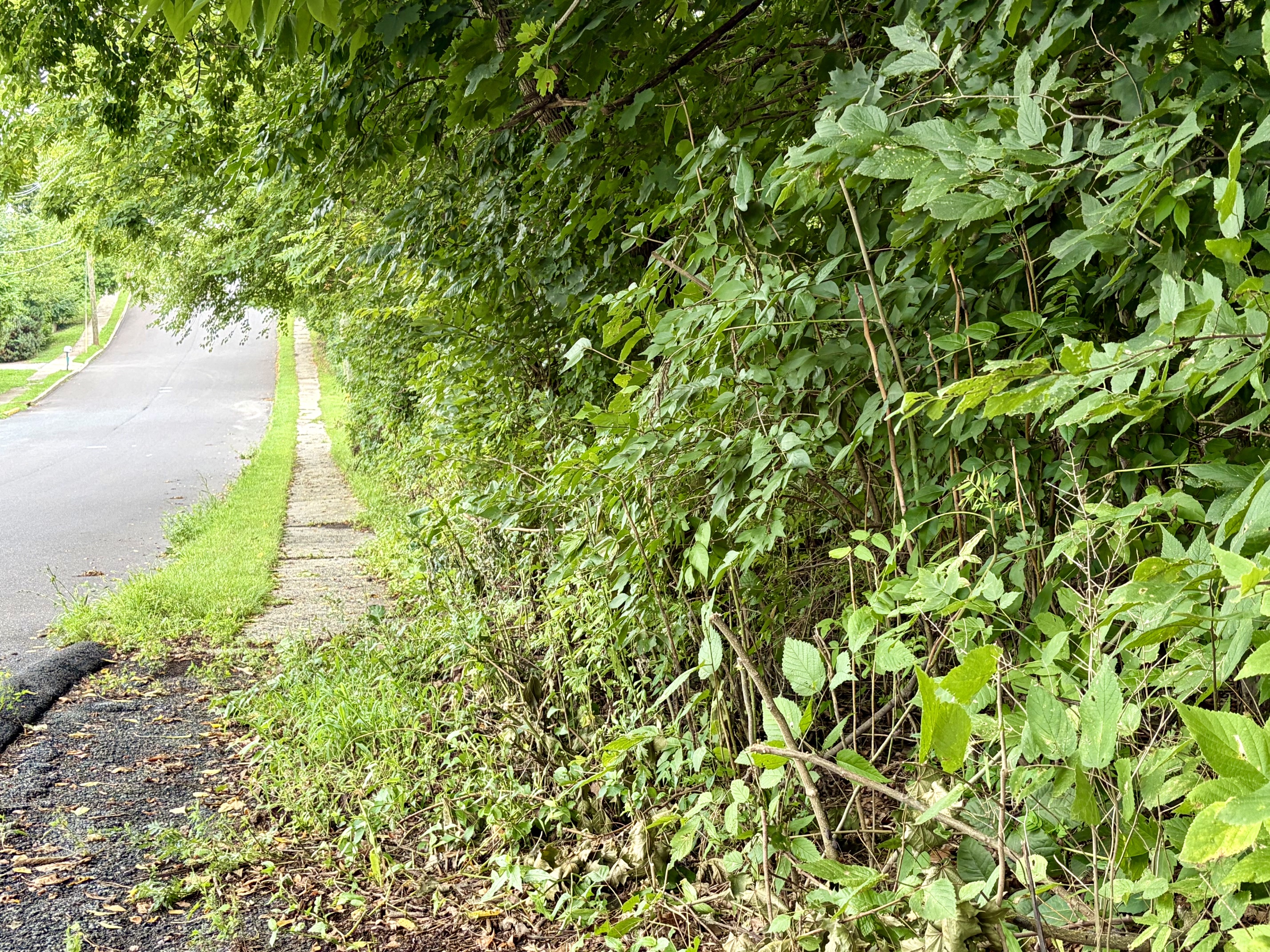
During its first meeting on Monday, Spring City's newly formed environmental advisory council (EAC) suggested changes to a proposed borough weeds ordinance, voting to recommend raising the allowable height of grass and weeds from six inches to 10 inches.
Borough council referred the standalone weeds ordinance to the advisory group after a discussion earlier this month, asking it to weigh in on the environmental aspects of the measure. EAC Chair Dylan Hutchinson, who is also a member of borough council, said the EAC’s role was limited to environmental questions and did not extend to matters such as fines or enforcement timelines.
As drafted, the ordinance would bar property owners from allowing vegetation to grow taller than six inches. EAC members noted that violations must be visible from a public right-of-way to be enforceable.
Hutchinson said his research found other municipalities set limits ranging from six to 12 inches, with many landing around eight inches.
Hutchinson initially proposed an eight-inch limit. He said keeping grass somewhat longer during the summer can help roots become better established, take up more water, and avoid scorching.
Vice Chair Sarah Grady argued for 10 inches, saying that height would more clearly distinguish a neglected yard from ordinary growth than a two-inch increase from the proposed limit. The EAC voted to recommend the 10-inch standard to borough council.
Rethinking What Counts as Overgrowth
The EAC also recommended simplifying — and effectively broadening — the ordinance's exemption for managed meadows.
The draft defines a managed meadow as a deliberately established and periodically maintained landscape consisting primarily of native grasses, wildflowers, and other herbaceous vegetation. It would also prohibit woody vegetation, including trees and shrubs, and require managed meadows to remain free of species appearing on state noxious weed and invasive plant lists.
Members questioned the practicality of enforcing the restrictions and raised concerns that they could inadvertently affect intentional native, ornamental, or other managed plantings. They also discussed the difficulty of keeping a managed meadow entirely free of species covered by those restrictions.
Hutchinson initially proposed removing only the prohibition on trees and shrubs, but the EAC ultimately went further. Members voted to recommend removing both that restriction and the requirement that managed meadows be free of species on state noxious weed and invasive plant lists.
Hutchinson said the recommendations would be forwarded to borough council, which will ultimately decide whether to incorporate them into the ordinance at a future meeting.
Looking Ahead
Spring City Borough Council voted to create the EAC in July after Hutchinson proposed the idea earlier this year. The group currently has three members: Hutchinson, Grady, and Councilor Sara Woll. It can expand to as many as seven members.
Earlier in Monday’s meeting, members elected Hutchinson as the EAC's first chair and Grady as vice chair. Hutchinson, a Chester County Master Gardener, said he was willing to lead the newly established group but would step aside as chair in the future if another member of the EAC wanted the role.
Grady, who has studied horticulture through the Barnes Foundation and St. Joseph's University, said she sought the vice chair position in part to learn the governmental side of the advisory council, with an eye toward possibly serving as chair in the future.
The EAC also discussed potential projects, including maintenance or improvements at Brown Street Park, assisting with the pollinator garden at the Spring City Library, community composting and gardening programs, and adding trash and recycling containers along Main Street. Some efforts could involve coordination with other borough committees and departments, including parks and recreation and public works.
Members said future meetings could focus on further defining the EAC's role, recruiting volunteers, and prioritizing projects.